The reason AI has not cured cancer may be that almost none of its training data comes from human tissue
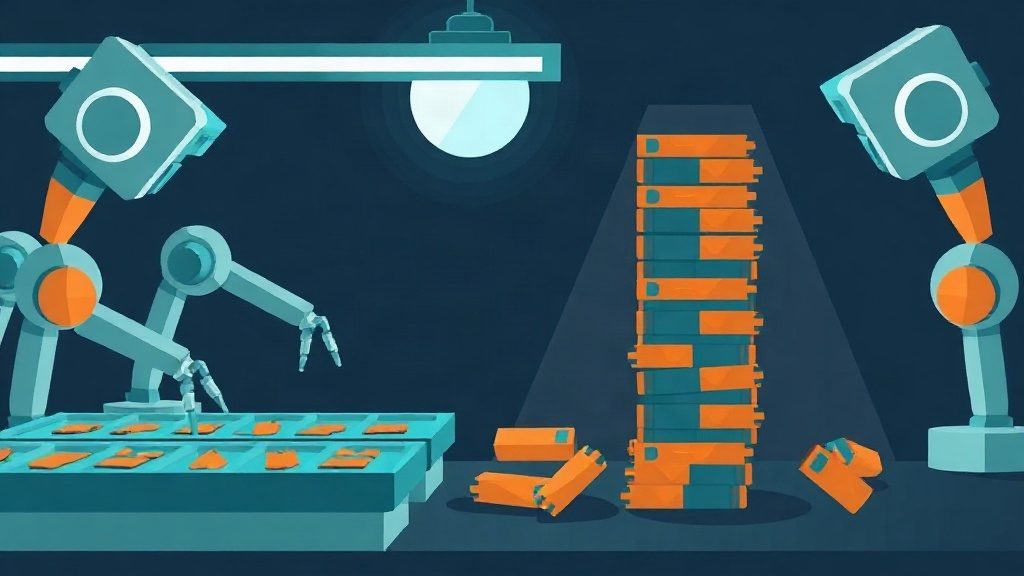
Vivodyne, a company that grows human tissue in robotic laboratories, put an argument to TechCrunch on 19 August that is worth taking seriously even if you discount the sales pitch. Drug discovery models are trained largely on static snapshots of cells and on animal experiments, and roughly nine out of ten drugs that work in animals fail once they reach human trials. The company's position is that the models are not short of parameters, they are short of causal data about human biology — records of what a human tissue does over time when you actually give it something. Its answer is a robotic system it calls HIVE, which grows twenty types of human tissue, doses and monitors them without human hands, and which the company says now runs at a scale it describes as roughly twice that of all US clinical trials combined. It reports predictive accuracy of 94 percent for liver toxicity, 96 percent for airway behaviour and complete agreement with known outcomes for twenty chemotherapy drugs tested on bone marrow. Eight large pharmaceutical companies have paid for early access. Vivodyne has raised close to $80 million. The accuracy figures are the company's own and have not been independently replicated.
Related stories
A model learned to write without the method that trains every AI.2026-10-06The US got 16 countries to put AI at the centre of science.
2026-10-05Mathematicians cracked five open problems using an ordinary chat box.
2026-10-05Untuned models solved agent tasks their polished versions could not.
2026-10-04Pretraining on everyday photos got a model to 70% on a reasoning test.
2026-10-04